The next week moved quietly.
Classes, short walks, tea from the same street vendor every evening. Shimla had that way of making routine feel like comfort. Or maybe I was just letting myself sink into it.
Rayan called mid-week. His voice was the same steady, low, polite in a way that didn’t feel forced.
“I’m working on the east wing today,” he said. “If you’re not busy, you might like what we found.”
I don’t know why I said yes so easily. Curiosity, maybe. Or just the way he made everything sound simple.
When I reached the mansion, the workers were gone for lunch. The entire place felt still again, like it was holding its breath. Rayan met me at the door, a faint trace of dust on his coat.
“Come in,” he said. “Watch your step near the corner floorboards are uneven.”
Inside, sunlight came through high windows, cutting sharp lines across the floor. He led me through a corridor I hadn’t seen before. The air there smelled faintly of paint and something old. It was almost like paper that had been closed too long.
“This used to be the study,” he said. “We found something interesting behind the paneling.”
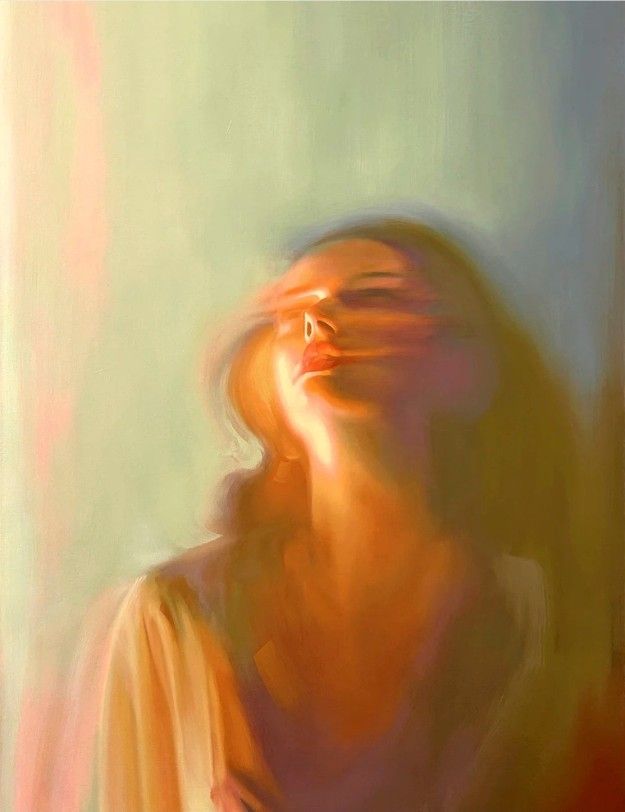
He moved a wooden screen aside. Behind it was a large, unfinished portrait covered partly by a thin layer of dust.
It showed a woman.
Not clearly, not completely. The outlines were soft, the features barely formed, but there was enough to notice something familiar.
I stood there for a second, unsure what to say.
“She looks…” I began, then stopped.
Rayan looked at the painting, then at me. “Go on.”
“She looks… almost like me,” I said finally. “The face shape. Even the hair.”
He smiled faintly. “Coincidence, I guess. Or maybe the artist liked that kind of face.”
I nodded, but something about his tone made it feel less casual.
“Who painted it?” I asked.
“Not sure. It was hidden behind a false wall. Could’ve been one of the family portraits that never got finished.”
He brushed off some dust from the corner with his thumb. This revealed a small mark. It could be a signature, but it was too faded to read.
“Strange thing,” he said quietly, “sometimes I think these old houses remember people.”
I gave a small laugh. “That’s one way to describe history.”
He looked at me again, as if weighing something. “Maybe. Or maybe we just remind them of who they’ve lost.”
The way he said it made my skin tighten. Not fear, not discomfort just that strange feeling when a conversation crosses into something heavier than intended.
He turned away after a moment. “Come, I’ll show you the library.”
The rest of the tour went as usual. Books stacked neatly, furniture half-covered, the faint hum of a heater somewhere. But my mind kept drifting back to the portrait.
Later, over tea, I asked again. “You’re sure you don’t know who she was?”
“No,” he said, looking at his cup. “But it’s funny. You’re not the first one who said she looks familiar.”
“Really?”
He nodded. “The caretaker said the same when he saw it last month. He thought she looked like someone from town. I didn’t ask who.”
He smiled after saying that, but it didn’t reach his eyes this time.
The evening I left, the sky had turned an early shade of blue. It’s the kind that comes just before the first stars. My boots left clear prints in the snow. They were side by side with his for a few meters. Then, they split in different directions.
Back at the guesthouse, I couldn’t stop thinking about the painting.
I told myself it was nothing.
Just coincidence.
But later that night, while brushing my hair, I caught my reflection in the mirror and paused.
For a second, I thought of the woman’s face in that portrait. The unfinished lines, the soft eyes, the same curve of the jaw.
It wasn’t fear I felt. It was recognition.
Like looking at a version of myself I hadn’t met yet.





Leave a Reply